
Journal of Clinical and Biomedical Sciences
DOI: 10.58739/jcbs/v16i1.24.51
Year: 2026, Volume: 16, Issue: 1, Pages: 84-86
Case Report
Karthik K1, Karthik S2, Krishnappa J3, Reddy V R S4, Srikanth C5*
1III rd Year Post Graduate, Department of Paediatrics, SDUMC, Kolar, Karnataka, India.
2Assistant Professor, Department of Paediatrics, SDUMC, Kolar, Karnataka, India.
3Professor, Department of Paediatrics, SDUMC, Kolar, Karnataka, India.
4Professor and HOD, Department of Paediatrics, SDUMC, Kolar, Karnataka, India.
5Associate Professor, Department of Paediatrics, SDUMC, Kolar, Karnataka, India
*Corresponding Author
Email: [email protected]
Received Date:17 June 2024, Accepted Date:31 October 2025, Published Date:21 April 2026
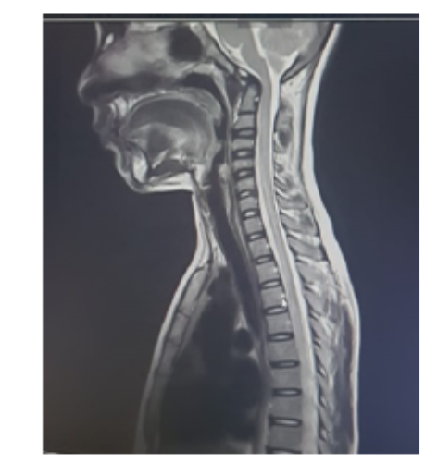
Acute Disseminated Encephalomyelitis (ADEM) is an inflammatory condition that causes demyelination in the central nervous system (CNS). It usually occurs in children and is characterized by multifocal brain lesions and encephalopathy. An 11-year-old male presented with a 15-day history of fever, pain abdomen for 1 week, neck pain with inability to walk for 3 days, and loss of bladder control for 1 day. Systemic examination done revealed hypotonia in the lower limbs with hyporeflexia. MRI brain with spine done revealed - scattered T1 iso-hypo and T2 hyperintensity involving spinal cord, suggestive of Acute Disseminated Encephalomyelitis. The child was started on supportive management and Intravenous Methyl Prednisolone. The child clinically improved, partially attained bladder control and was discharged with tapering doses of oral steroids. On follow up the child attained complete bladder control and was able to walk completely in the following 3 months. ADEM can manifest atypically with hypotonia in the lower limbs with loss of bladder control. Neuroimaging and a high index of suspicion are crucial for the diagnosis and treatment of these individuals.
Keywords: Encephalomyelitis, Neuroimaging, Methyl Prednisolone
1. Wang CX. Assessment and Management of Acute Disseminated Encephalomyelitis (ADEM) in the Pediatric Patient. Pediatric Drugs. 2021; 23 (3). Available from: https://doi.org/10.1007/s40272-021-00441-7
2. Paolilo R, Deiva K, Neuteboom R, Rostásy K, Lim M. Acute Disseminated Encephalomyelitis: Current Perspectives. Children. 2020; 7 (11). Available from: https://doi.org/10.3390/children7110210
3. Krupp LB, Tardieu M, Amato MP, Banwell B, Chitnis T, Dale RC, et al. International Pediatric Multiple Sclerosis Study Group criteria for pediatric multiple sclerosis and immune-mediated central nervous system demyelinating disorders: revisions to the 2007 definitions. Multiple Sclerosis Journal. 2013; 19 (10). Available from: https://doi.org/10.1177/1352458513484547
4. Pohl D, Alper G, Haren K, Kornberg A, Claudia F. Acute disseminated encephalomyelitis. Updates on an inflammatory CNS syndrome. Neurology. 2016; 87 (9_Supplement_2). Available from: https://doi.org/10.1212/wnl.0000000000002825
5. Li K, Li M, Wen L, Wang Q, Ding X and Wang J. Clinical Presentation and Outcomes of Acute Disseminated Encephalomyelitis in Adults Worldwide: Systematic Review and Meta-Analysis. Frontiers in Immunology. 2022; 13 Available from: https://doi.org/10.3389/fimmu.2022.870867
6. Balamurugesan K, Ponprabha R, Davis P. An interesting case of acute disseminated encephalomyelitis following E. coli infection. Journal of Family Medicine and Primary Care. 2019; 8 (1). Available from: https://doi.org/10.4103/jfmpc.jfmpc_402_18
This is an open-access article distributed under the terms of the Creative Commons Attribution License, which permits unrestricted use, distribution, and reproduction in any medium, provided the original author and source are credited.
Published By Sri Devaraj Urs Academy of Higher Education, Kolar, Karnataka
Subscribe now for latest articles and news.