Journal of Clinical and Biomedical Sciences
DOI: 10.58739/jcbs/v15i4.25.182
Year: 2025, Volume: 15, Issue: 4, Pages: 299-305
Original Article
Patel Saurabh Dineshbhai1*, Girish M2, Shobha S N2, Vedashree M K2, Ahbhilash N P2, Navyashree N3, Vanisri H R4
1Post Graduate Student, Department of Pathology, Chamarajanagar Institute of Medical Sciences, Chamarajanagar, Karnataka, India.
2Associate Professors, Department of Pathology, Chamarajanagar Institute of Medical Sciences, Chamarajanagar, Karnataka, India.
3Assistant Professor, Department of Pathology, Chamarajanagar Institute of Medical Sciences, Chamarajanagar, Karnataka, India.
4Professor and Head, Department of Pathology, Chamarajanagar Institute of Medical Sciences, Chamarajanagar, Karnataka, India.
*Corresponding Author
Email: [email protected]
Received Date:16 April 2025, Accepted Date:02 June 2025, Published Date:31 December 2025
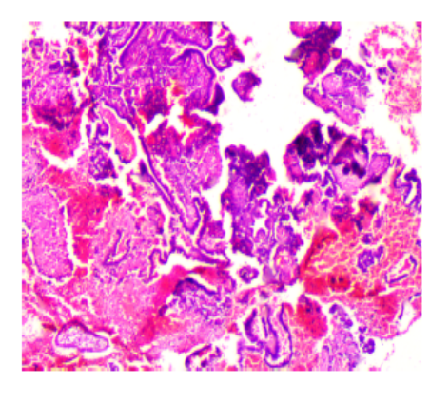
Background: Abnormal uterine bleeding (AUB) is a frequent gynecological issue and histopathological evaluation of the endometrium is considered the definitive diagnostic method. Endometrial sampling is necessary to determine the underlying cause of abnormal uterine bleeding (AUB). Aim: This study was conducted to assess the histopathology of the endometrium and to observe the frequency of different endometrial pathology patterns across various age groups presenting with abnormal uterine bleeding. Material and Methods: The current study was done at Department of Pathology in Chamarajanagar Institute of Medical Sciences and Hospital, Chamarajanagar, Karnataka., on cases of abnormal uterine bleeding who underwent endometrial sampling by Dilatation and curettage (D and C), endometrial biopsy and hysterectomy. A statistical analysis between age of presentation and specific endometrial causes was done using χ2 test. Results: We studied 200 cases. The most common pattern observed was normal cycling endometrium (32.5%). The other morphological patterns were endometrial polyp (20%), atrophic phase pattern (19.5%) Endometrial Hyperplasia without Atypia (18%), disordered proliferative pattern and carcinoma (2.5%), Atypical hyperplasia (1.5%) and chronic endometritis (0.5%). The most common age group presenting with AUB was 36-45 years (47.18%) followed by 46-55years (33.76%). Endometrial causes of AUB and age distribution was statistically significant with P value<0.05. Conclusion: There is an age specific association of endometrial lesions. Atrophy, endometrial hyperplasia and carcinoma endometrium are predominant in peri-menopausal and post-menopausal age. The study of various endometrial patterns in females with AUB is helpful in achieving accurate diagnosis and guiding appropriate treatment.
Keywords: AUB, Hyperplasia, Atypia, Carcinoma
1. Munro MG, Critchley HO, Fraser IS. The two FIGO systems for normal and abnormal uterine bleeding symptoms and classification of causes of abnormal uterine bleeding in the reproductive years: 2018 revisions. International Journal of Gynecology & Obstetrics. 2018; 143 (3). Available from: https://doi.org/10.1002/ijgo.12666
2. Mazur MT, Kurman RJ. Diagnosis of endometrial biopsies and curettings: a practical approach. 2nd edition. Springer Science & Business Media. 2005; Available from: https://doi.org/10.1007/978-0-387-26321-2
3. Khan R, Sherwani RK, Rana S, Hakim S, Jairajpuri ZS. Clinico-pathological patterns in women with dysfunctional uterine bleeding. <I>Iranian journal of pathology</I>. 2016;11(1):20-26.
4. Munro MG, Critchley HO, Broder MS, Fraser IS. FIGO classification system (PALM‐COEIN) for causes of abnormal uterine bleeding in nongravid women of reproductive age. International Journal of Gynecology & Obstetrics. 2011; 113 (1). Available from: https://doi.org/10.1016/j.ijgo.2010.11.011
5. Goldstein SR. Modern Evaluation of the Endometrium. Obstetrics & Gynecology. 2010; 116 (1). Available from: https://doi.org/10.1097/aog.0b013e3181dfd557
6. McCluggage WG. My approach to the interpretation of endometrial biopsies and curettings. Journal of Clinical Pathology. 2006; 59 (8). Available from: https://doi.org/10.1136/jcp.2005.029702
7. Albers JR, Hull SK, Wesley RM. Abnormal uterine bleeding. <I>American family physician</I>. 2004 Apr 15;69(8):1915-1926.
8. Vani BS, Vani R, Bai JP. Histopathological evaluation of endometrial biopsies and curetting’s in abnormal uterine bleeding. Tropical Journal of Pathology and Microbiology. 2019; 5 (4). Available from: https://doi.org/10.17511/jopm.2019.i04.02
9. Mune SB, Karche AG. Histopathological patterns of endometrial lesions in patients with abnormal uterine Bleeding in rural area of Western Maharashtra. Indian Journal of Pathology and Oncology. 2016; 3 (4). Available from: https://doi.org/10.5958/2394-6792.2016.00124.1
10. Sajitha K, Padma SK, Shetty JK, Kishanprasad HL, Permi HS, Hegde P. Study of histopathological patterns of endometrium in abnormal uterine bleeding. CHRISMED Journal of Health and Research. 2014; 1 (2). Available from: https://doi.org/10.4103/2348-3334.134265
11. Purohit J, Barjatya R, Kataria SK. The Study of Different Endometrial Pattern in Dysfunctional Uterine Bleeding of Women in Western Rajasthan. Journal of Advances in Education and Philosophy. 2023; 6 (05). Available from: https://doi.org/10.36348/sijap.2023.v06i05.003
12. Longacre TA, Atkins KA, Kempson RL, Hendrickson M. The uterine corpus. <I>Sternberg’s Diagnostic Surgical Pathology, Vol. 2, Philadelphia</I>: 2010:2438-535.
13. Shah R, Dayal A, Kothari S, Patel S, Dalal B. Histopathological interpretation of endometrium in abnormal uterine bleeding. International Journal of Medical Science and Public Health. 2014; 3 (4). Available from: https://doi.org/10.5455/ijmsph.2014.120220142
14. Sharma A, Lastra RR. Uterus. Endometrial hyperplasia. <I>PathologyOutlines.com</I>. http://www.pathologyoutlines.com/topic/uterusendometrialhyperplasiageneral.html.
15. Doraiswami S, Johnson T, Rao S, Rajkumar A, Vijayaraghavan J, Panicker VK. Study of Endometrial Pathology in Abnormal Uterine Bleeding. The Journal of Obstetrics and Gynecology of India. 2011; 61 (4). Available from: https://doi.org/10.1007/s13224-011-0047-2
16. Divya KN, Jayashree K, Bharath C. The Diagnostic Value of Endometrial Biopsy in Postmenopausal Uterine Bleeding. Indian Journal of Pathology: Research and Practice. 2017; 6 (1). Available from: https://doi.org/10.21088/ijprp.2278.148x.6117.7
17. Desai K, Patole K, Kathaley M. Endometrial Evaluation by Histopathology in Abnormal Uterine Bleeding in Perimenopausal and Postmenopausal Patients. MVP Journal of Medical Sciences. 2014; 1 (2). Available from: https://doi.org/10.18311/mvpjms/2014/v1/i2/820
18. Hileeto D, Fadare O, Martel M, Zheng W. Age dependent association of endometrial polyps with increased risk of cancer involvement. World Journal of Surgical Oncology. 2005; 3 (1). Available from: https://doi.org/10.1186/1477-7819-3-8
19. Livingstone M, Fraser IS. Mechanisms of abnormal uterine bleeding. Human Reproduction Update. 2002; 8 (1). Available from: https://doi.org/10.1093/humupd/8.1.60
This is an open-access article distributed under the terms of the Creative Commons Attribution License, which permits unrestricted use, distribution, and reproduction in any medium, provided the original author and source are credited.
Published By Sri Devaraj Urs Academy of Higher Education, Kolar, Karnataka
Subscribe now for latest articles and news.